 You are in our Global Site


Dec 31 , 2025
Metal fabrication is a nuanced field that demands precision, speed, and efficiency. Among the myriad technologies available, roll forming machines and press brake machines stand out for their distinct capabilities and applications. Understanding their operational differences, cost implications, efficiency metrics, material suitability, and ideal use cases can aid businesses in making informed decisions that optimize their production processes. Whether you're considering a metal roof making machine or exploring the benefits of a gutter making machine, this guide provides a comprehensive comparison that can enhance your metal fabrication strategy.
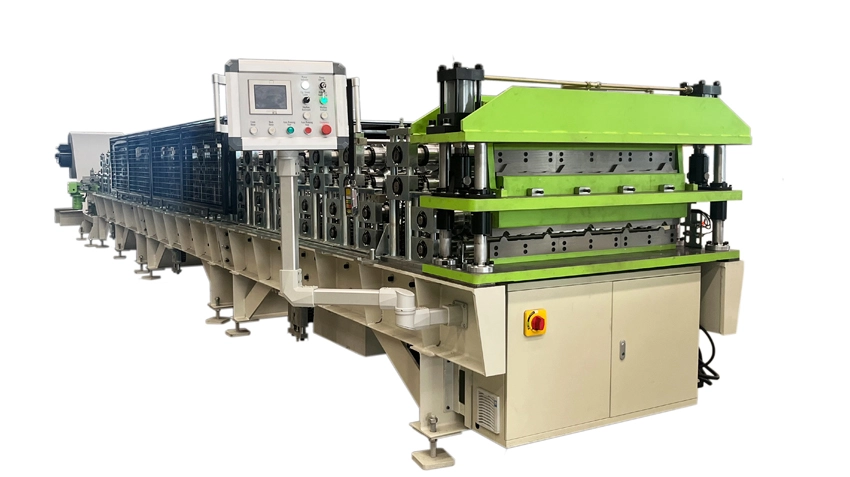
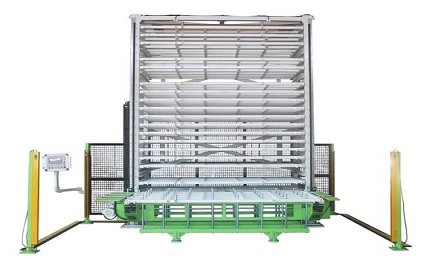
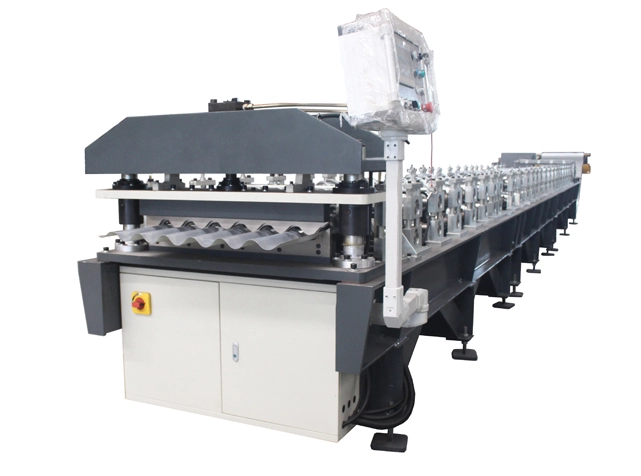
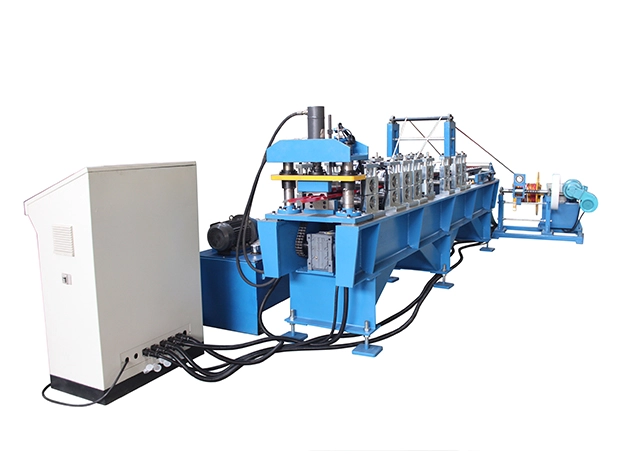
Roll forming machines and press brake machines are pivotal in sheet metal fabrication, each employing unique mechanisms to shape metal components. The roll forming machine gradually bends metal by passing it through successive sets of rollers, achieving continuous production of profiles. Ideal for producing metal roofing machines and vertical sheet racks, roll forming allows for consistent shape replication over long production runs.
Conversely, press brake machines use a mechanical or hydraulic press to bend sheets into specific angles, offering precision on shorter runs. This method is well-suited for custom jobs and intricate components such as downspout machines and challenging machine roofs. Understanding these operational approaches equips businesses with the knowledge necessary to choose the most appropriate technology for specific tasks.
Cost considerations are integral to the decision-making process in metal fabrication. Roll forming machinery typically incurs higher initial investment due to its complexity and sophisticated roller sets. However, its ability to produce large volumes consistently and efficiently reduces operational costs in high-output scenarios. For businesses focusing on products like metal roof forming machines for sale, roll forming is often a financially savvy choice.
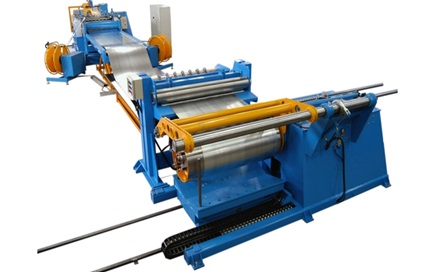
On the other hand, press brake machines offer lower upfront costs, making them appealing for companies with limited budgets or those requiring occasional bending tasks. While this technology is more labor-intensive in high-volume applications, it excels in specialized production such as slitting machines or sheet metal slitters, providing flexibility across diverse tasks.
The efficiency and speed of metal fabrication technology profoundly impact production timelines and overall output. Roll former machines are renowned for their continuous production capability, producing uniform profiles rapidly with minimal labor input. This makes them advantageous for industries needing swift, unvarying shapes, such as rain gutter making machines or standing seam metal roof machines.
Conversely, press brake machines, with their stop-and-go operation, are inherently slower but offer unmatched precision for complex bends. Their ability to adapt to quick changes in production requirements makes them suitable for detailed tasks where customization is key, demonstrating their effectiveness in scenarios where quality trumps speed.
Material compatibility is a critical consideration when choosing between roll forming and press brake technologies. Roll forming is ideally suited for ductile materials like steel and aluminum, often used in metal roll forming machines. The process ensures uniform material properties along the length of the component.
| Technology | Materials | Applications |
|---|---|---|
| Roll Forming | Steel, Aluminum | Metal roof profiles, Long components |
| Press Brake | Variety of sheet metals | Custom bends, Intricate designs |
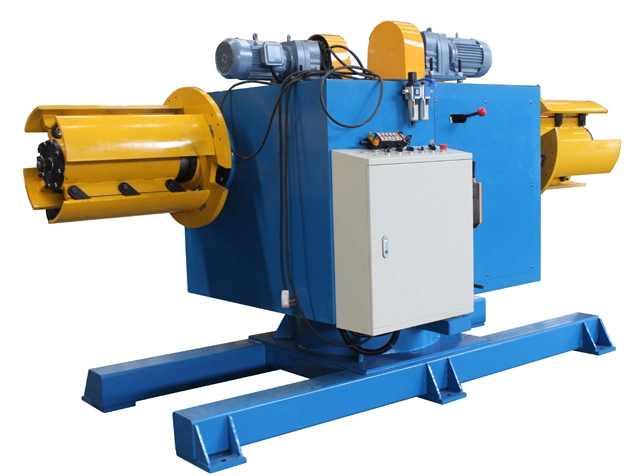
Press brake machines, versatile in material handling, can manage various sheet metal types but often require careful material consideration to avoid cracking during bending. This makes them advantageous for specialized projects like gutter forming machines or decoiler machines.
Identifying the best applications for roll forming and press brake machines can streamline production efficiency and elevate product quality. Roll forming is optimal for high-volume production of uniform components like roof panel machines, offering consistency and speed for products requiring extensive repetition.
Press brake machines excel in projects demanding precise and varied bends, making them indispensable for custom assemblies or specialized components such as uncoilers. Their adaptability in handling different sheet sizes and thicknesses also positions them well for versatile fabrications.
In exploring gutter machines for sale or tailoring production with press brake technology, understanding these strategic differences can offer significant business advantages, aligning capabilities with business objectives.
Navigating the intricate field of metal fabrication with clarity is paramount to enhancing productivity and achieving desired operational goals. Whether opting for the efficiency of roll forming or the precision of press brake methods, each offers distinct benefits tailored to specific applications. Businesses must weigh factors such as production volume, material compatibility, and cost implications to select the most suitable technology. As you explore the realm of metal forming machines, this insightful guide empowers informed decisions that drive innovation and success within your operations.
References: