 You are in our Global Site


Aug 05 , 2026
Choosing a cut to length machine requires more than comparing maximum coil width or advertised operating speed. The correct configuration depends on the coil material, thickness range, coil weight, required sheet length, flatness standard, length tolerance and downstream production process.
A machine that works well for thin galvanized sheet may not provide enough leveling capacity for thicker or higher-strength steel. Likewise, a faster line does not automatically produce better sheets if the feeding, leveling, cutting and stacking systems are not matched to the material. Buyers should therefore define the finished sheet requirements first and select the machine configuration around the actual production task.
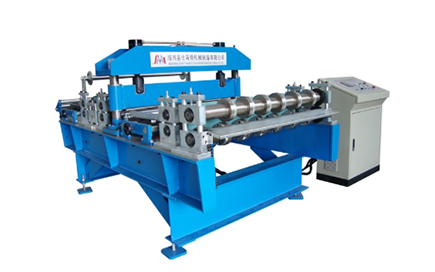
A cut to length machine processes metal coils into flat sheets of predetermined lengths. The coil is unwound, guided, leveled, measured and cut transversely before the finished sheets are collected or stacked. Typical materials include carbon steel, stainless steel, galvanized steel, pre-painted steel and aluminum, subject to the machine’s confirmed capacity.
A complete coil cut to length machine may include a coil car, decoiler, guiding device, leveling unit, servo feeding system, cutting unit, conveyor and receiving or stacking equipment. The final configuration depends on the material properties and required finished-sheet quality.
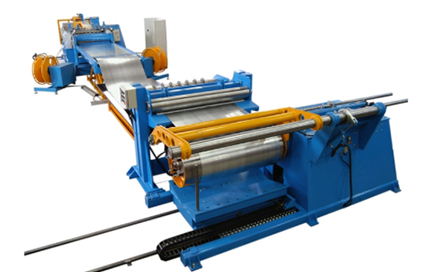
Cut-to-length processing is different from longitudinal slitting. A steel slitting machine divides a wide master coil into narrower strips, while a cut to length machine cuts the coil across its width to produce rectangular sheets. Some factories need only one process, while others require both narrow coils and fixed-length sheets.
The most useful machine specification is not always the largest value shown in a quotation. Each parameter should be checked against the materials and products the factory expects to process regularly.
| Buyer Input | Why It Matters | Machine Component Affected |
| Coil material | Different materials have different strength, surface and springback characteristics | Leveler, cutting system and drive power |
| Minimum and maximum thickness | Determines the required leveling force and cutting capacity | Leveling rolls, frame and cutter |
| Maximum coil width | Defines the working width of the complete production line | Decoiler, leveler, feeder and cutter |
| Coil weight, ID and OD | Determines whether the coil can be loaded and supported safely | Coil car and decoiler |
| Required sheet length | Affects measuring, feeding and receiving arrangements | Servo feeder, encoder and conveyor |
| Length tolerance | Defines the required measuring and control accuracy | Servo system, encoder and PLC |
| Flatness requirement | Determines how much leveling correction is required | Leveling unit and roll arrangement |
| Required output | Influences feeding speed, cutting cycle and automation level | Drive system, cutter and stacker |
Buyers should provide both the most common production range and the maximum required capacity. Designing the entire machine around an occasional extreme specification may increase cost and complexity without improving normal production efficiency.
Light-gauge and heavy-gauge machines perform the same basic process, but their structures and operating requirements can differ substantially.
A light-gauge machine is generally intended for thinner coils that can be leveled with a relatively compact roll arrangement. These systems may prioritize higher feeding speed, frequent length changes and automatic stacking. They are commonly considered for applications involving roofing sheets, appliance panels, light fabrication and general sheet processing.
A heavy-gauge machine requires a stronger frame, larger shafts, higher drive power and greater leveling and cutting force. It may also need more robust coil handling equipment because thicker coils can be considerably heavier. In this case, flatness and cutting stability may be more important than maximum line speed.
When comparing configurations, buyers should pay attention to:
The actual material yield strength, not only nominal thickness
The number, diameter and arrangement of leveling rolls
The rated capacity of the decoiler and coil car
The cutting method and maximum cutting force
The finished sheet support and stacking method
A supplier should confirm whether the quoted capacity applies to the full material width and strength range. A machine may process a stated maximum thickness only at a reduced width or lower material strength, so these conditions should be clarified before ordering.
Finished sheet quality is determined by the coordination of several machine sections. Increasing the speed of one section cannot compensate for unsuitable leveling or inaccurate feeding.
Coiled material retains curvature and internal stress after unwinding. The leveling unit repeatedly bends the strip in alternating directions to reduce coil set and improve flatness. The required roll arrangement depends on material thickness, strength and the expected flatness standard.
Thin material may require smaller leveling rolls and closer roll spacing, while thicker material generally needs a stronger leveling structure. Buyers should also confirm whether the machine is intended for basic flattening or more demanding precision leveling.
The feeding system advances the material by a preset distance before each cut. Servo control and encoder feedback are commonly used to manage sheet length, but final performance also depends on stable material contact, correct calibration and controlled acceleration.
Required tolerance should be stated as a measurable production requirement rather than described only as “high precision.” It is also important to confirm whether the tolerance applies to one test sheet or to continuous batch production.
The cutting system must match the material type, thickness and width. An unsuitable blade clearance or insufficient cutting capacity can produce burrs, deformation or inconsistent edges. Buyers should ask how the cutter is adjusted for different materials and how blades are maintained or replaced.
Factories requiring both longitudinal slitting and transverse sheet cutting may consider a cut to length and slitting machine. However, the combined system should be selected only when both processes are regularly required, because additional equipment increases the line layout, control requirements and investment.
Before requesting a proposal, prepare a complete specification sheet. This helps the supplier recommend a practical configuration and reduces the risk of receiving quotations based on different assumptions.
List every coil material and its yield strength
Confirm the normal and maximum thickness ranges
Provide the maximum coil width, weight, ID and OD
State the minimum and maximum finished sheet lengths
Define the required length tolerance and flatness standard
Estimate sheets per minute, tons per shift or daily output
Explain how finished sheets will be collected and transferred
Provide the available workshop length, width and height
Confirm factory voltage and electrical standards
Request a complete component, tooling and safety configuration list
Buyers should also ask whether factory acceptance testing will use material that is similar to their production coils. Testing only with a thinner or softer material may not demonstrate performance under the actual operating conditions.
Price comparisons should be based on equivalent configurations. Differences in decoiler capacity, leveling structure, servo system, cutting method, stacking equipment and electrical components can significantly affect the final proposal.
A cut to length machine cuts coil material transversely into fixed-length sheets. A slitting machine cuts the master coil longitudinally into narrower strips and rewinds them into smaller coils.
The main factors are material type and strength, thickness range, coil width and weight, finished sheet length, flatness requirement, length tolerance and required production output.
No. Productivity also depends on cutting cycle time, sheet handling, stacking, material changes and operator workflow. A lower-speed system with stable automation may provide better practical output than a faster machine with frequent interruptions.
State the acceptable positive and negative variation for the finished sheet and confirm whether it must be maintained across continuous batch production. The supplier should explain the measuring and control method used to achieve it.
A machine may process several materials when its leveling, feeding and cutting systems are configured accordingly. However, differences in strength, surface sensitivity and springback should be reviewed before confirming the machine design.
Provide the coil material, strength, thickness, width, weight, ID and OD, required sheet sizes, tolerance, flatness standard, production output, receiving method, workshop space and local electrical supply.
The right cut to length machine should be selected around the finished sheet rather than a single maximum specification. Coil width and weight determine material handling capacity, thickness and strength affect leveling and cutting, while speed and tolerance influence feeding, control and stacking. A detailed coil specification and production plan allow the supplier to configure a machine that is practical for daily output, sheet quality and future production needs.