 You are in our Global Site


Jun 09 , 2026
Decoiler machines are essential in modern metal processing and roll forming operations. They hold and uncoil large metal coils, feeding material efficiently into downstream machines such as roll formers, cutting lines, or stamping equipment. Understanding how much does a decoiler cost requires considering multiple factors that influence pricing, performance, and total return on investment.
Smartech Machinery, a leading decoiler manufacturer in China, offers high-quality solutions designed for industrial metal processing, combining durability, automation, and energy-efficient design. Choosing the right decoiler can optimize production efficiency while minimizing long-term operational costs.
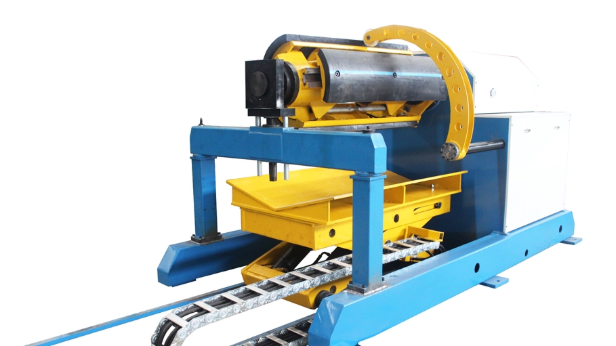
The cost of a decoiler machine varies based on structural design, coil capacity, control systems, and automation features. A standard definition is: “A decoiler is a machine that holds, supports, and unrolls coils of metal strip or sheet, delivering controlled feed into downstream production equipment.”
Factors affecting pricing include:
Frame material and structural strength
Drive systems (hydraulic, pneumatic, or electric)
Automation and control technology
High-quality decoilers are designed for continuous operation, which means robust construction and precise engineering, both of which contribute to the initial investment.
Coil capacity is one of the most significant determinants of cost. Machines designed for heavier coils require reinforced frames, stronger motors, and more advanced hydraulic and control systems.
Specifications of Smartech Machinery Decoilers (3T–15T):
| Model | Coil Capacity | ID of Coil | Max OD of Coil | Min OD of Coil | Width of Coil | Speed of Decoiling | Power Source | Total Power |
|---|---|---|---|---|---|---|---|---|
| 3T Decoiler | 3T | φ508/610 mm | Φ1200 mm | N/A | Max 400/600 mm | Min 35 m/min | 380V/3PH/50Hz | N/A |
| 5T Automatic Decoiler | 5T | φ508/610 mm | Φ1350 mm | N/A | Max 1250 mm | Min 35 m/min | 380V/3PH/50Hz | N/A |
| 8T Decoiler with Coil Cart | 8T | φ508 mm | Φ1250 mm | Φ750 mm | 1000–1250 mm | ≤35 m/min | 380V/50Hz/3PH | About 8.5 kW |
| 10T Uncoiler Machine | 10T | φ508/610 mm | Φ1250 mm | Φ750 mm | 1000–1250 mm | ≤35 m/min | 380V/50Hz/3PH | About 10.5 kW |
| 15T Decoiler with Coil Car | 15T | φ508/610 mm | Φ1250 mm | Φ750 mm | 1000–1250 mm | ≤35 m/min | 380V/50Hz/3PH | About 10.5 kW |
The differences in coil capacity, maximum diameter, and width range directly affect machine complexity, motor power, and structural reinforcements, all contributing to higher costs for larger models.
Practical applications:
3T Decoiler: Suitable for small-scale production and light sheet metal lines
5T Decoiler: Ideal for medium-volume operations, provides moderate automation
8T–15T Decoiler: Best for high-volume, continuous roll forming lines, integrated with coil carts for heavy loads
Automation adds value by improving efficiency, reducing labor, and minimizing material waste. PLCs, VFD motors, and tension sensors are common enhancements in modern decoilers.
Automation benefits include:
PLC-based control for automatic coil feeding and speed adjustments
VFD-controlled motors for energy-efficient operation
Sensor-based tension and alignment monitoring
Although automation increases upfront investment, it reduces operational costs over time by improving production consistency and reducing scrap. For example, an automated 10T decoiler feeding a high-speed roll forming line can significantly reduce downtime compared to a manual system.
Manual decoilers are simpler, less expensive, and easier to maintain, but they rely heavily on operator skill. Automatic decoilers offer higher throughput, more consistent feed rates, and enhanced safety, which justifies the higher cost in high-volume operations. Key distinctions:
Manual decoilers require operator adjustments for coil placement and feed speed
Automatic decoilers integrate motorized drives, sensors, and PLCs
Automated systems provide higher production efficiency, lower scrap rates, and improved safety
Manufacturers need to weigh the upfront cost against expected efficiency gains when deciding between manual and automatic systems.
When assessing how much does a decoiler cost, it is important to consider hidden costs beyond the initial purchase price. Installation, maintenance, energy use, and ancillary equipment can impact total investment.
Potential hidden costs:
Coil handling accessories such as lifting carts
Routine replacement of hydraulic or mechanical components
Operator training and certification programs
Electricity and energy consumption over time
Considering these hidden costs ensures manufacturers can accurately estimate total cost of ownership and plan for long-term operation.
Selecting the right decoiler depends on coil weight, production line speed, desired automation level, and downstream equipment compatibility. Smartech Machinery provides flexible solutions, including cantilever-type mandrels, hydraulic expansion systems, and electric control panels, which allow seamless integration into modern production lines.
Selection tips:
Match coil capacity with production requirements
Evaluate the benefits of automation for your line
Confirm compatibility with roll forming, stamping, or slitting lines
Choosing a suitable decoiler not only impacts cost but also ensures production stability and reduces material waste.
Beyond machine specifications, manufacturers should consider long-term factors:
Maintenance schedule: Regular inspection, lubrication, and alignment checks prevent downtime and prolong machine life.
Energy efficiency: Machines with VFD motors and PLC integration reduce electricity consumption.
Operational training: Skilled operators can reduce errors, improve line speed, and maintain product quality.
By factoring these into the total investment, the effective cost per ton of material processed can be minimized.
What is the main factor influencing decoiler cost?
Coil capacity, structural design, and automation features are primary cost drivers.
Are automatic decoilers significantly more expensive than manual ones?
Yes, automation increases initial cost but improves throughput, precision, and reduces material waste.
What hidden costs should manufacturers consider?
Installation, maintenance, energy use, and coil handling equipment impact total cost.
Can decoiler cost vary by brand?
Yes, established manufacturers like Smartech Machinery provide durable solutions with long-term support and service.
How does coil size affect pricing?
Larger coils require stronger frames, more powerful motors, and enhanced safety features, increasing machine cost.
Wikipedia – Coil Processing:
Encyclopaedia Britannica – Metalworking: