 You are in our Global Site


Jun 09 , 2026
In modern metal fabrication, production efficiency depends not only on machine capability but also on process stability, operator control, and consistent material handling. Roll forming technology has become widely used in industries such as construction, storage systems, transportation, and infrastructure because it supports continuous production of metal profiles with repeatable dimensions and relatively low material waste.
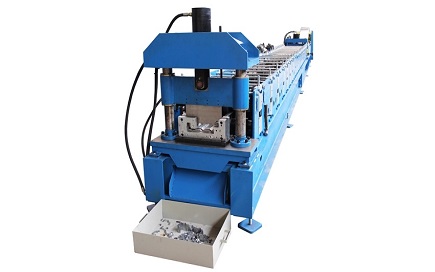
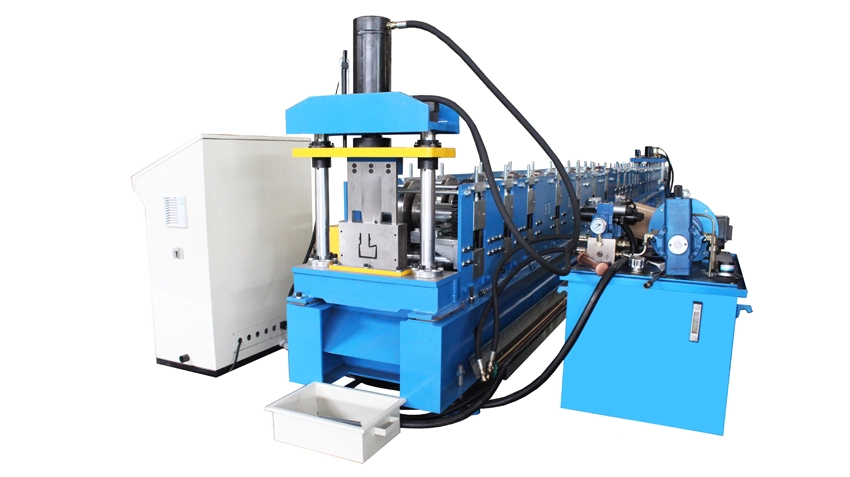
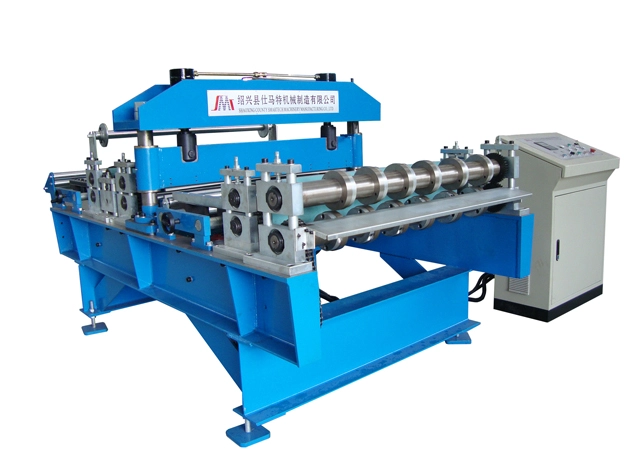
A roll forming machine is an industrial system that gradually shapes metal strip or coil into a continuous profile through multiple forming stations arranged in sequence.
According to the U.S. Department of Energy, continuous manufacturing technologies can improve operational efficiency and reduce unnecessary production waste in industrial applications.
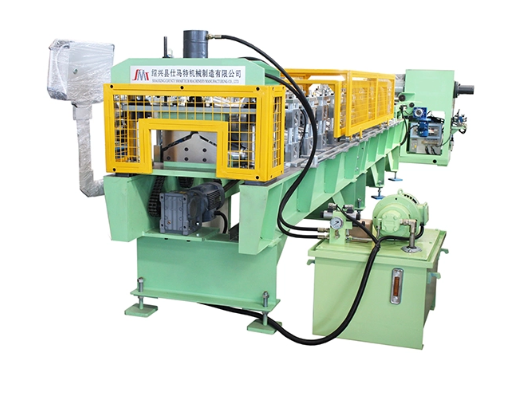
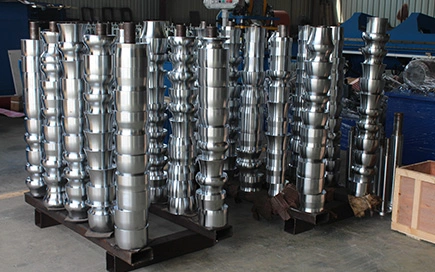
Unlike stamping or press braking, roll forming does not shape metal in a single operation. Instead, the metal strip passes through multiple roller stations, with each station performing a controlled portion of the forming process. This gradual deformation helps maintain dimensional consistency while reducing excessive stress on the material.
In industrial manufacturing, the phrase how roll forming machine work is commonly associated with continuous coil-fed production systems that rely on synchronized feeding, progressive forming, and automated cutting.
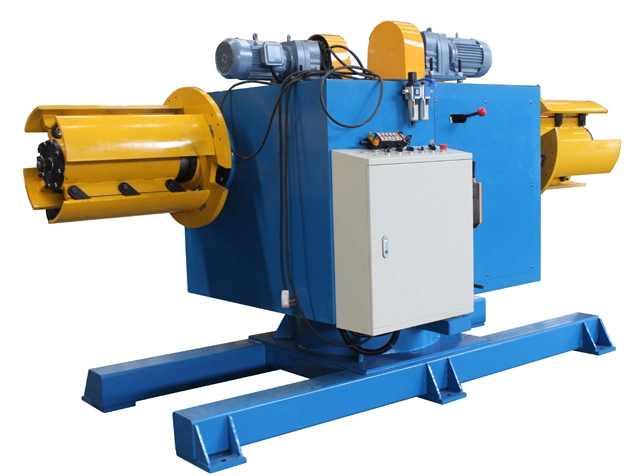
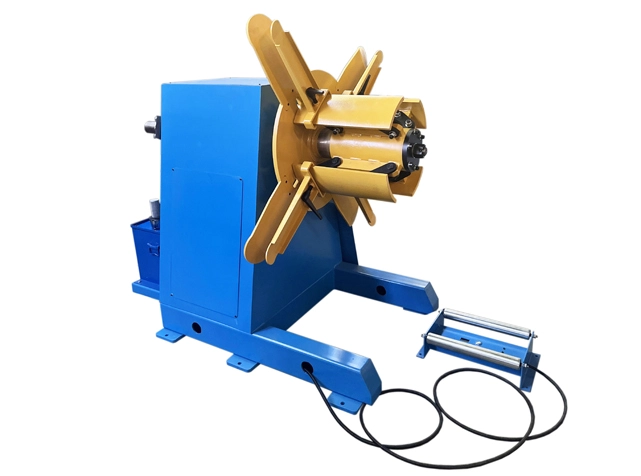
The production process typically begins when a metal coil is loaded onto a decoiler. The material then moves through feeding rollers into forming stations where the profile is shaped step by step. Once the required geometry is achieved, the finished product is cut to length and transferred for stacking or downstream processing.
Modern roll forming lines often use PLC systems to coordinate forming speed, cutting timing, and feeding synchronization. According to product information published by Smartech Machinery, some roll forming lines can be configured with punching systems, hydraulic cutting devices, and automatic stackers depending on production requirements.
| Production Stage | Operational Purpose |
|---|---|
| Coil Feeding | Maintains continuous material supply |
| Progressive Forming | Gradually shapes metal profile |
| Length Measurement | Controls cutting accuracy |
| Hydraulic Cutting | Separates finished products |
| Product Collection | Supports continuous production flow |
During continuous production, operators usually focus on several important process conditions:
Feeding stability
Roller alignment
Dimensional consistency
Surface quality
Because each forming station contributes only part of the final shape, small alignment errors may gradually affect product accuracy across long production runs.
Understanding how to operate roll forming machine systems correctly is essential for maintaining stable production and reducing unnecessary downtime.
Before startup, operators typically inspect roller alignment, hydraulic pressure, electrical systems, and lubrication conditions to ensure the machine is ready for continuous production. Even minor alignment deviations can affect profile accuracy during high-speed operation.
After inspection, the metal coil is positioned onto the decoiler. Proper coil centering is important because unstable feeding may lead to twisting, profile deviation, or inconsistent dimensions later in the forming process. In heavier-duty production lines, hydraulic decoilers and coil cars are commonly used to improve material handling safety.
Once the coil is secured, operators configure production parameters such as line speed, product length, cutting intervals, and material thickness settings. Modern PLC systems simplify these adjustments and help synchronize cutting operations with forming speed.
A typical operating sequence includes:
Loading the metal coil
Adjusting feeding alignment
Configuring production parameters
Starting progressive forming
Inspecting first-piece quality
During production, operators continuously monitor material movement through the forming stations. Attention is usually focused on feeding consistency, profile straightness, and surface condition. If feeding instability occurs, production defects may spread quickly across large batches.
Initial product inspection is also important during startup. Manufacturers commonly verify dimensional tolerances, hole positions, cutting accuracy, and edge quality before continuous production begins.
According to the National Institute of Standards and Technology (NIST), dimensional consistency is a key factor in maintaining manufacturing quality and reducing downstream assembly issues.
Even automated roll forming lines may experience operational problems if production conditions are not properly controlled. Most manufacturing issues are related to feeding stability, roller setup, or equipment wear.
| Operating Challenge | Typical Cause | Production Impact |
|---|---|---|
| Material deviation | Improper feeding alignment | Inconsistent profiles |
| Edge waviness | Uneven roller pressure | Dimensional instability |
| Surface scratches | Roller contamination | Surface quality defects |
| Twist deformation | Incorrect station alignment | Product rejection |
| Unplanned downtime | Poor maintenance | Production interruption |
Material feeding stability is especially important in continuous production environments. If coil tension fluctuates excessively, the profile may deform as it passes through multiple roller stations.
Operators often reduce production issues by focusing on:
Regular roller inspection
Stable coil tension
Accurate station calibration
Preventive maintenance
Roller wear can also affect dimensional accuracy over time. In many factories, preventive inspection schedules are used to identify bearing wear, roller contamination, or hydraulic instability before serious production problems occur.
Roll forming systems involve moving rollers, hydraulic cutting devices, electrical systems, and heavy metal coils. Maintaining operational safety is essential for both production continuity and worker protection.
Coil loading is often considered one of the highest-risk stages in roll forming operations because heavy coils must be positioned accurately while operators work near moving equipment. Hydraulic loading systems and coil handling devices help reduce manual lifting risks in larger production environments.
During machine operation, operators generally avoid direct contact with moving rollers and maintain safe distances from feeding sections and cutting areas. Emergency stop systems should also be inspected regularly to ensure rapid shutdown capability when necessary.
Consistent operating procedures, proper lockout practices during maintenance, and regular safety inspections all contribute to safer production environments.
In continuous manufacturing environments, preventive maintenance directly affects product consistency, equipment lifespan, and production efficiency.
Rollers are among the most important components requiring regular inspection because surface wear may gradually affect profile precision. Bearing conditions also influence feeding stability, especially during high-speed production.
Hydraulic systems should be monitored for pressure stability and leakage because unstable hydraulic performance may affect cutting accuracy or feeding synchronization. Electrical systems, sensors, and PLC controls also require periodic inspection to maintain reliable automation performance.
| Maintenance Area | Operational Importance |
|---|---|
| Rollers | Maintain profile accuracy |
| Bearings | Reduce vibration and instability |
| Hydraulic Systems | Support cutting consistency |
| PLC Controls | Maintain synchronization |
| Cutting Blades | Improve edge quality |
Many manufacturers use scheduled preventive maintenance programs because planned servicing is often more cost-effective than unexpected production downtime.
In roll forming production, higher efficiency does not always mean operating at maximum speed. In many manufacturing environments, production stability and reduced downtime have a greater impact on long-term productivity.
Stable feeding conditions help reduce material waste and prevent profile deformation during continuous production. Accurate roller alignment also minimizes adjustment time and improves dimensional consistency across production batches.
Automation systems can further improve operational efficiency by reducing manual intervention during feeding, cutting, and stacking processes. According to Smartech Machinery, modern roll forming lines may integrate servo feeding, hydraulic cutting, and automated stacking systems to support continuous production management.
Several operational factors commonly influence production efficiency:
Feeding synchronization
Roller condition
Production downtime
Operator experience
The U.S. Environmental Protection Agency notes that improving manufacturing efficiency and reducing material waste can contribute to lower operating costs and more sustainable industrial production.
Roll forming production depends on more than machine structure alone. Stable feeding, proper operation, preventive maintenance, and consistent process control all influence production quality and operational efficiency. By understanding how roll forming machines work in real production environments, manufacturers can reduce downtime, improve dimensional consistency, and maintain reliable long-term performance.
Roll forming machines use progressive forming stations to gradually shape the material while maintaining stable feeding and roller alignment throughout production.
Unstable feeding can cause profile deviation, surface defects, and dimensional inconsistency during continuous production.
Inspection frequency depends on production volume and material type, but regular preventive inspection is important for maintaining profile accuracy.
Improper roller alignment, uneven feeding tension, and worn components are common causes of profile deformation.
Yes. PLC systems, servo feeding, and automated cutting can improve synchronization, reduce downtime, and support stable production.